Inside the garden
What you see in the garden
Cacti, pools, a Cubist villa and a former studio: what the garden's own website and Wikipedia say you walk through, and what the booking page adds.
Check garden dates ↗Quick answer
The garden is a walled maze of alleys on different levels, planted with cacti and other exotic specimens, with pools and fountains and a cobalt-blue Cubist villa. The former painting studio now holds the Berber Museum, which needs a separate ticket. There is a café inside, and the garden-only ticket is self-guided.
A walled garden of alleys
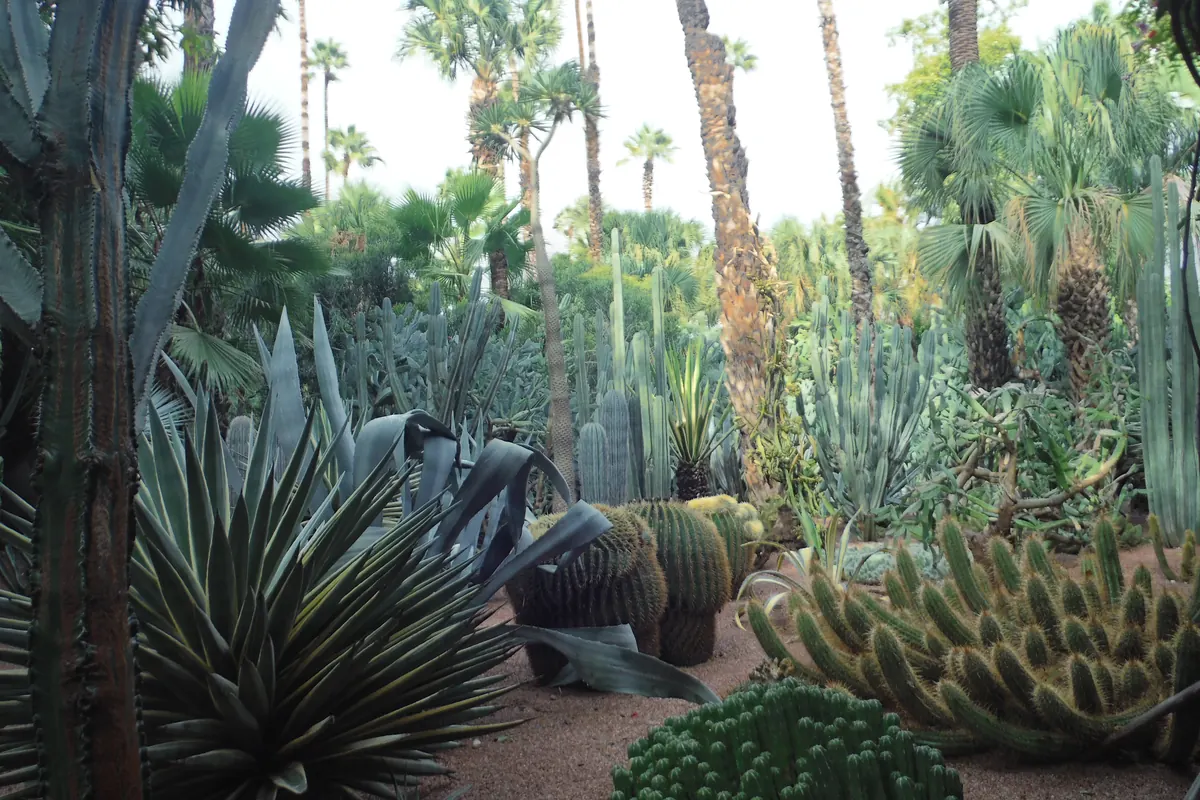
The garden's website describes a garden enclosed by outer walls and made of crisscrossing alleyways on different levels, with boldly coloured buildings that blend Art Deco and Moorish influences. Jacques Majorelle conceived it, the website says, as a sanctuary and a botanical laboratory. There is no single route. A reviewer on the booking page says no information is displayed as you wander, so what follows is a map in words.
The cactus beds
Wikipedia calls the garden's collection of cacti notable, and the garden's website says Majorelle began planting it with exotic specimens from the far corners of the world. The cacti stand in beds beside the villa, and the booking page describes rare flora beside soothing water features. If you want names, bring a plant guide or read up first, since the garden-only ticket comes with no guide.
Pools and fountains
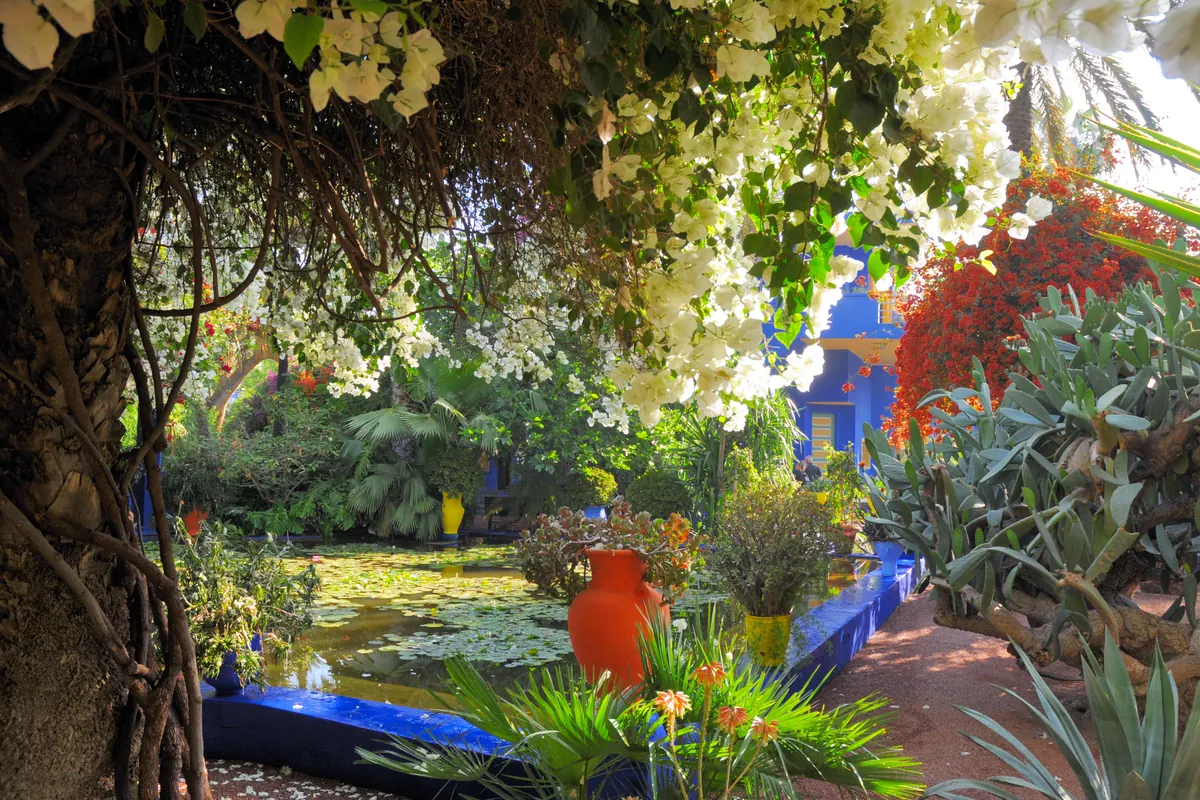
The booking page lists water features and fountains among the planting, and Wikipedia says the garden has many fountains. The blue that edges the pools is the same cobalt as the villa. Wikipedia adds that the garden hosts more than 15 bird species that are endemic to North Africa. The booking page describes the setting as a serene escape amidst rare flora and soothing water features.
The blue villa
Wikipedia says Majorelle commissioned the architect Paul Sinoir in 1931 to design a Cubist villa for the grounds. Yves Saint Laurent and Pierre Bergé later lived there and renamed it the Villa Oasis, the garden's website says. The booking page calls it an iconic blue villa. The garden's website lists a private garden of the Villa Oasis separately, with its own opening days, so read that page if you want to know what is open.
The former studio and the Berber Museum
The garden's website says the Berber Museum, inaugurated in 2011, is housed in Majorelle's former painting studio. It is part of the same property, but the garden-only ticket does not open it. The museum has its own page and its own ticket, and its collection, gathered from the Rif Mountains to the Sahara, is displayed in four spaces by theme. The guide to the two tickets explains how the garden, the Berber Museum and the Yves Saint Laurent Museum fit together.
Read next: Garden only, or with museums?
The café and the shade
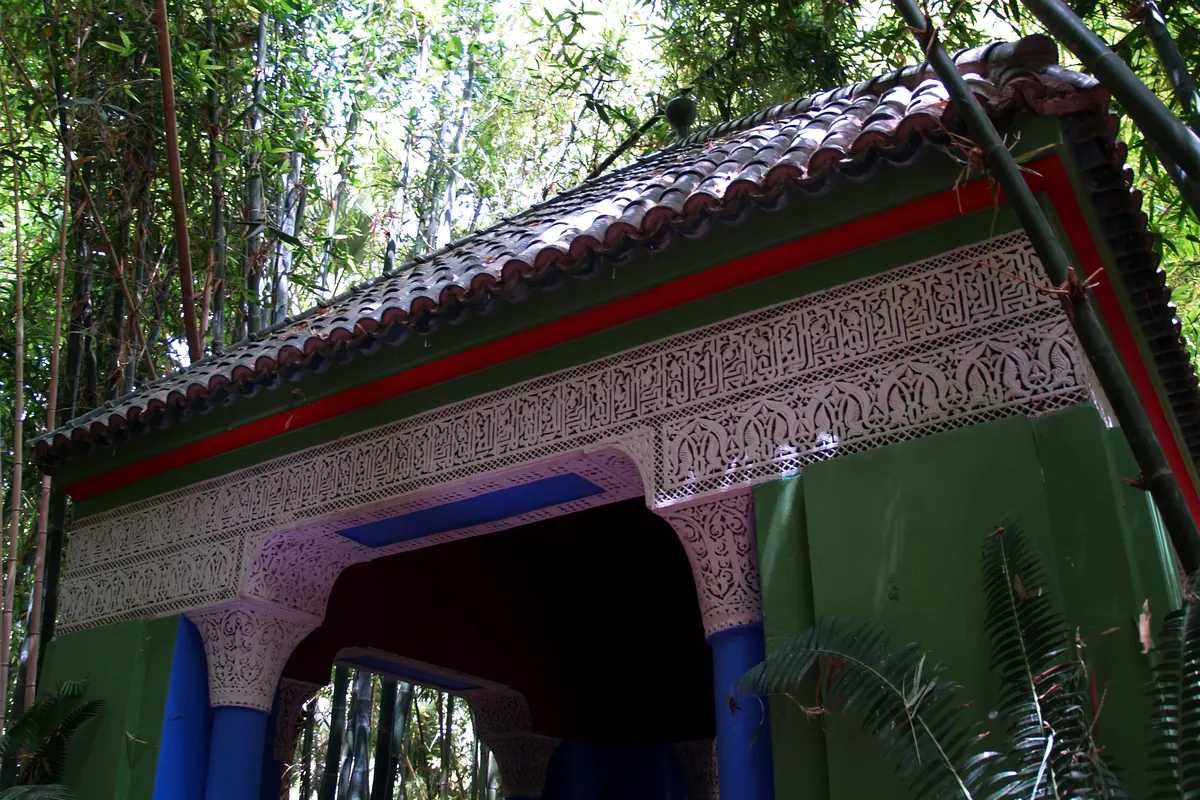
The Café Majorelle occupies what the garden's website says was the servants' quarters in Majorelle's day, with small Moroccan salons and an inner courtyard planted with orange trees and white bougainvilleas. It serves breakfast, a lunch menu and drinks, and it opens the same hours as the garden. The booking page says food is not allowed in, so the café is where you eat.
Who this isn't for
A visitor who expects labelled displays, a museum route or a long walk will be disappointed. The garden is a small, intense and popular place: the garden's own press release and Wikipedia both count its yearly visitors in the hundreds of thousands, and the booking page warns of longer waits in peak seasons. If you want the history told to you, a guided option may suit better than this self-guided entry.
Frequently asked questions
What is in the Majorelle Garden?
Cacti and other exotic plants, pools and fountains, alleys on different levels and a blue Cubist villa, according to the garden's website and Wikipedia.
Is there a café?
Yes. The Café Majorelle is in the garden's former servants' quarters, and it is open the same hours as the garden.
Can I enter the Berber Museum with a garden ticket?
No. The museum has its own ticket and the garden-only booking page says it is not included.
Is there a guide inside?
Not with the garden-only ticket. It is a self-guided visit with no meeting point.
Sources